Quick answer
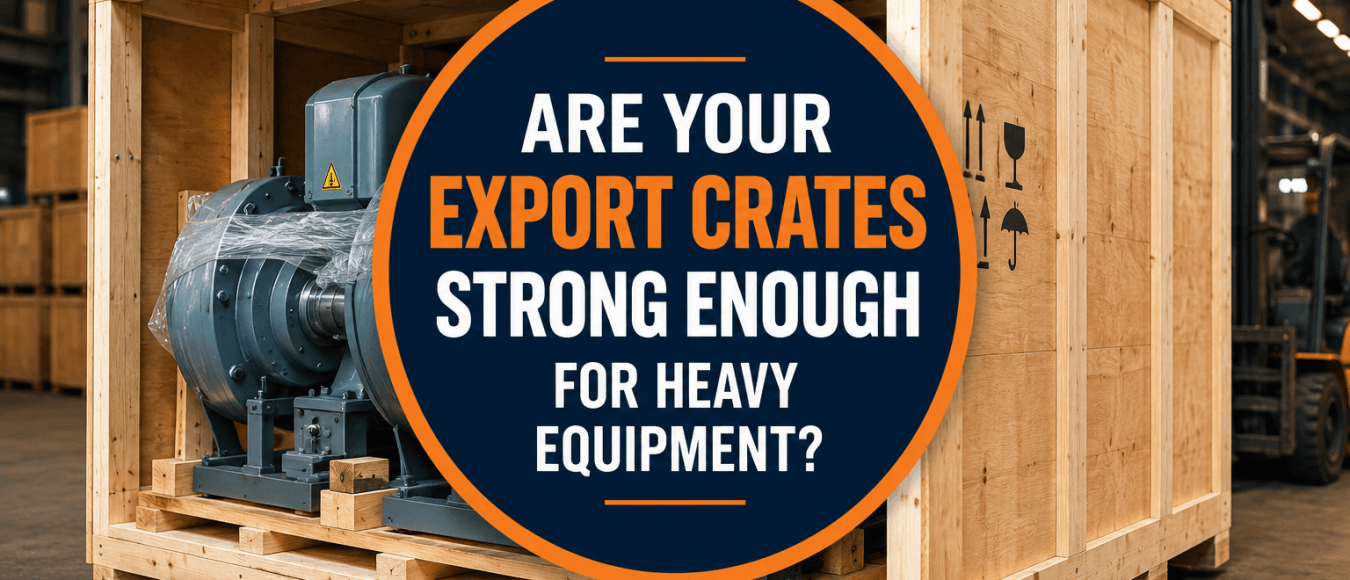
Heavy equipment needs export crates that are designed around the machinery, not simply built bigger. The right crate supports the equipment during lifting, transport and storage, while meeting export compliance requirements and reducing the risk of freight damage, delays and costly repairs.
Key takeaways
- Heavy equipment should be packed according to its weight, centre of gravity and lifting points, not just its overall size.
- A well designed crate prevents movement during transport, helping reduce freight damage and installation delays.
- Moisture protection and ISPM 15 compliance are just as important as structural strength for international shipments.
- Standard crate designs rarely suit specialised industrial machinery or oversized equipment.
- Investing in engineered packaging is often far less expensive than replacing damaged equipment or delaying a project.
Heavy equipment is expensive to build, expensive to move, and even more expensive to repair if something goes wrong during shipping. Well designed export crates, supported by the right machinery packing methods and export packaging, don’t just protect timber. They protect production schedules, installation dates, and equipment that may be worth hundreds of thousands of dollars. That’s why many manufacturers choose purpose built crates designed specifically for the machinery they’re exporting, rather than adapting a standard design.
A damaged crate is rarely the real problem.
The real problem is what happens after it fails. A delayed installation. Engineers standing around waiting for replacement parts. Crane hire booked months in advance that now has to be rescheduled. Production lines sitting idle while insurance claims work their way through the system.
Those costs almost always outweigh the price of building the crate properly in the first place.
Why export crates fail during international freight
Most crate failures have very little to do with the timber itself.
More often, the crate simply wasn’t designed for the way the equipment would be handled.
Think about a three tonne CNC machine leaving Melbourne for Europe. Before it reaches its destination, it may be lifted by two different forklifts, loaded into a shipping container, transferred through multiple ports, lifted again at the destination, then transported by road to its final site. Every lift places different forces through the crate.
We’ve seen equipment arrive with cracked mounting points, not because the timber broke, but because the machine shifted only a few millimetres inside the crate. Every braking force during transport was transferred straight into the equipment instead of the base designed to support it.
If you’d like to understand more about common shipping failures, read Why Export Crates Fail During International Freight.
Export crates for heavy equipment need to be engineered, not oversized
Making a crate bigger doesn’t automatically make it stronger.
Neither does using heavier timber.
A five tonne generator can sometimes be easier to secure than a one tonne machine with an uneven centre of gravity. A long conveyor section creates different stresses from a compact electric motor. A food processing machine with exposed stainless components needs different protection from mining equipment heading to a remote site.
That’s why experienced packaging engineers start by looking at the machinery, not the timber.
They want to know where the lifting points are. How the weight is distributed. Whether the equipment can be bolted directly to the base. Whether it will travel by sea, air or road. Those answers shape the crate long before the first piece of timber is cut.
Good machinery packing starts with understanding how the equipment moves
Every handling point matters.
A machine might only spend six weeks at sea, but it could be lifted ten or twelve times before it reaches its final destination.
Each lift introduces another opportunity for movement.
That’s why good machinery packing focuses just as much on what happens inside the crate as the crate itself.
Bolting equipment to engineered bases. Supporting vulnerable sections. Isolating sensitive components. Protecting electrical cabinets. Preventing movement before it starts.
A few extra hours spent designing the packing system can prevent weeks of delays once the shipment arrives.
Businesses planning major equipment movements often combine engineered crates with specialist Machinery and Capital Equipment Packing services so the same team designs, packs and prepares the shipment from start to finish.
Export packaging needs to protect against more than impact
Heavy machinery rarely travels through perfect conditions.
A container travelling from Australia to Europe may spend more than a month exposed to changing temperatures and humidity. Condensation forms inside containers far more often than many exporters realise.
The timber crate might survive perfectly.
The machinery inside may not.
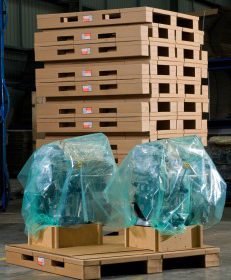
That’s why good export packaging often includes vapour barrier materials, corrosion protection, desiccants and moisture control systems alongside the timber crate itself.
For precision equipment, protecting against corrosion can be just as valuable as protecting against impact.
If your shipment includes sensitive machinery, How to Choose Export Packaging for Fragile Equipment explains the different protection options available.
Compliance matters before the shipment even leaves Australia
A strong crate won’t help if customs won’t accept it.
Most export markets require timber packaging to comply with ISPM 15 regulations. Without compliant heat treatment and the correct markings, shipments can be delayed, inspected or refused entry.
That can create storage costs, shipping delays and missed installation dates before anyone even opens the crate.
If your business exports regularly, Understanding ISPM 15 Regulations Australian Exporters Need to Know explains what to check before your next shipment leaves Australia.
The cheapest crate can become the most expensive decision
Procurement teams naturally compare packaging prices.
That’s part of the job.
But packaging should always be compared against the value of what’s inside it.
Saving a few hundred dollars on a crate makes little sense if a damaged shipment delays commissioning for two weeks, leaves contractors waiting onsite, or pushes production back by a month.
One of CMTP’s customers, EOS Defence Systems, reduced shipping costs by more than one third by changing the packaging design rather than simply buying cheaper packaging. Looking at the whole freight system often produces better results than focusing on the crate alone.
That’s the difference between buying timber and investing in packaging design.
Custom crates solve problems standard designs never see
Standard crate sizes work well for standard loads.
Heavy industrial equipment rarely fits that description.
Large pumps, mining components, switchboards, manufacturing equipment and specialised production machinery all place different demands on their packaging.
Sometimes the answer is additional internal bracing.
Sometimes it’s changing where the machine is supported.
Sometimes it’s redesigning the base so the equipment can be lifted safely at both ends of the journey without introducing new stress into the load.
Those decisions come from understanding how equipment behaves during transport, not from selecting thicker timber.
If you’re weighing up your options, our guide to Custom Crates vs Standard Boxes explains when a purpose built solution delivers better long term value.
Protect the shipment before it becomes a freight problem
Once a shipment leaves your site, your options become limited.
The best time to solve transport problems is while the equipment is still sitting in your warehouse.
CMTP designs and manufactures export crates for heavy equipment across manufacturing, mining, defence, food production and industrial sectors. Every project begins with understanding the equipment, how it will be handled, where it is travelling, and what protection it needs along the way. From engineered crate design and specialist machinery packing through to compliant export protection, the goal is simple. Help your equipment arrive in exactly the same condition it left.
If you’re planning an upcoming export project, contact CMTP for a quote and talk with our team about a packaging solution designed for your equipment, your freight route, and your destination.
FAQs
How do I know if my export crate is strong enough?
The crate should be designed around the equipment’s weight, dimensions, centre of gravity and transport method. If you’re relying on a standard crate for heavy or specialised machinery, it’s worth having the design reviewed before shipping.
Do all heavy machines require a custom export crate?
Not always. Standard crates may suit some equipment, but machinery with unusual dimensions, sensitive components or high values often benefits from a purpose built design that improves protection and handling.
Why is movement inside the crate such a problem?
Even small amounts of movement can transfer shock loads into the machinery during braking, lifting or rough handling. Keeping the equipment securely restrained is often more important than simply adding thicker timber.
What export requirements apply to timber crates?
Most countries require timber packaging to comply with ISPM 15 regulations. Using compliant heat treated timber and the correct markings helps avoid delays, inspections and rejected shipments.
Can CMTP help with more than just the crate?
Yes. CMTP can assist with crate design, machinery packing, corrosion protection, export packaging and engineering support, helping ensure equipment is protected from departure through to delivery.
Related articles
Continue learning about export packaging and heavy equipment transport with these related guides: