When comparing custom pallets vs standard pallets, many businesses focus on upfront price. On paper, standard pallets often appear cheaper, which makes them attractive for short-term budgeting. But pallet costs are rarely limited to the initial purchase. Over time, factors such as product damage, freight efficiency, compliance risk, and replacement frequency play a much larger role in what pallets actually cost your business.
For manufacturers, exporters, and logistics operators, the smarter question is not which pallet is cheaper today, but which pallet delivers lower total cost over its working life.
Understanding the Difference Between Custom and Standard Pallets
Standard pallets are mass-produced to fixed dimensions and load ratings. They are designed for general freight where products are uniform and handling conditions are predictable. In some high-volume domestic applications, standard pallets can be sufficient.
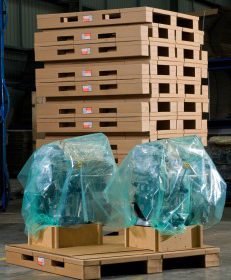
Custom pallets are engineered specifically for the product they carry, how it is handled, and where it is going. Dimensions, timber grade, load capacity, forklift access points, and compliance requirements are all designed around the real-world application. At CMTP, custom pallets are manufactured for industrial loads, export freight, food handling, and heavy machinery where failure or inefficiency is costly.
You can view CMTP’s full pallet manufacturing capabilities.
Where Standard Pallets Often Cost More Over Time
Standard pallets frequently introduce hidden costs that only become obvious after months or years of use. When a pallet is not designed for the specific weight distribution or shape of a load, stress points form. This increases the likelihood of pallet failure, product movement, and damage during transport.
Poor pallet fit also leads to inefficient container loading. Gaps, overhangs, and uneven stacking reduce how much product can be shipped per container, increasing freight costs across every shipment. Over time, this inefficiency compounds and can far outweigh the initial savings of buying cheaper pallets.
Compliance is another major risk area. Exporters using pallets that are not correctly treated or certified can face shipment delays, quarantine holds, or outright rejection at destination ports. These disruptions are expensive and can damage customer relationships.
CMTP manufactures ISPM 15 compliant export pallets that meet Australian and international quarantine requirements.
How Custom Pallets Reduce Long-Term Costs
Custom pallets are designed to eliminate inefficiency at every stage of the supply chain. Because they match the product precisely, they reduce load movement, vibration, and stress during handling and transport. This directly lowers damage rates and rework.
Handling efficiency also improves. Forklift operators spend less time adjusting loads, pallet stability improves in racking, and automated systems operate more reliably when pallets are built to consistent specifications.
For exporters and regulated industries, compliance is built into the design rather than treated as an afterthought. Heat treatment, material selection, and documentation are handled as part of the manufacturing process, reducing the risk of delays or non-compliance.
Custom pallets also tend to last longer. When a pallet is engineered for the correct load and handling method, it is not being pushed beyond its limits. Fewer failures and fewer replacements result in a lower cost per use over time.
Comparing Long-Term Costs Over a Pallet’s Lifecycle
A standard pallet may cost less to purchase, but if it needs replacing more frequently, contributes to product damage, or increases freight costs through poor load optimisation, it becomes more expensive over its lifespan.
Custom pallets typically deliver savings through longer service life, reduced product loss, improved freight utilisation, and built-in compliance. For businesses shipping high-value goods, heavy machinery, or export freight, these savings often offset the higher upfront cost within the first year of use.
When Standard Pallets Can Still Be the Right Choice
Standard pallets can still make sense in low-risk, short-term applications where loads are uniform, margins are tight, and compliance requirements are minimal. High-volume domestic distribution with predictable handling is one example.
The key is understanding when standardisation supports efficiency and when it creates long-term cost leakage.
Choosing the Right Pallet Strategy for Your Business
Pallets are often treated as a consumable, but for many businesses they are a critical part of the supply chain. Companies that assess pallet performance based on total cost, not purchase price, consistently achieve better operational outcomes.
With national manufacturing capacity and decades of experience supplying Australian industry, CMTP works with procurement and operations teams to design pallets that reduce risk, improve efficiency, and lower long-term costs.
If you want to understand whether your current pallets are costing more than they should, speak with CMTP’s team.
For official guidance on export pallet compliance, the Australian Government outlines ISPM 15 requirements through the Department of Agriculture.
Frequently Asked Questions
Are custom pallets always more expensive than standard pallets?
Custom pallets usually have a higher upfront cost, but they often deliver lower long-term costs through longer lifespan, reduced damage, and improved efficiency.
How do custom pallets reduce freight costs?
They are designed to maximise container and truck space, reducing wasted volume and lowering transport cost per unit.
Do custom pallets meet export compliance requirements?
Yes. Custom export pallets can be manufactured to ISPM 15 standards with full heat treatment and certification.
Are custom pallets suitable for food and beverage industries?
Custom pallets can be manufactured to HACCP standards, making them suitable for food, dairy, and pharmaceutical environments.
How long do custom pallets last compared to standard pallets?
Custom pallets typically last longer because they are engineered for specific loads and handling conditions rather than general use.
Can custom pallets be used in automated warehouses?
Yes. Custom designs can be tailored to suit conveyors, racking systems, and automated handling equipment.
Is there a minimum order quantity for custom pallets?
Order quantities depend on the design and materials, but CMTP supports both short production runs and high-volume supply.
How quickly can custom pallets be supplied?
With manufacturing facilities across Australia, CMTP can deliver custom pallets with fast and reliable turnaround times.
Who benefits most from custom pallets?
Exporters, manufacturers shipping high-value goods, heavy industry, and regulated sectors see the greatest long-term savings.
Get A Quote
If pallets play a critical role in your supply chain, the right design can unlock measurable long-term savings. CMTP can assess your current pallet setup and identify where efficiency, durability, and compliance improvements can reduce cost and risk. Request a quote today.