In mining, energy and construction environments, pallets are not a secondary purchasing decision. They play a critical role in how heavy, oversized and high value materials are moved safely through complex supply chains. When loads are extreme, conditions are harsh and delays are costly, standard pallets are rarely suitable.
Heavy duty pallets are purpose built to support demanding industrial applications. They are engineered to handle high loads, uneven weight distribution, challenging handling methods and exposure to outdoor conditions. Choosing the right pallet design can reduce product damage, improve site safety and prevent costly disruptions.
At CMTP, heavy duty pallets are designed and manufactured specifically for industrial use, not adapted from standard pallet designs. Each solution is engineered around the load, handling method and transport conditions rather than relying on generic specifications.
What is a heavy duty pallet
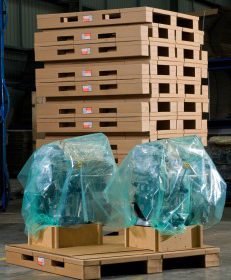
A heavy duty pallet is an engineered load platform designed to support significantly higher weights and more demanding handling conditions than standard pallets. These pallets are commonly used for mining equipment, construction materials, infrastructure components and energy sector freight where load failure is not an option.
Unlike standard pallets, heavy duty pallets are built using structural design principles. Load ratings are assessed across static, dynamic and racking conditions. Deck spacing, bearer size and timber selection are calculated to support the product safely throughout transport and handling.
Why standard pallets fail in industrial environments
Standard pallets are designed for repeatable, uniform freight and high circulation environments. In mining and construction applications, loads are often oversized, uneven or concentrated at specific points. This creates stress that standard pallets are not designed to withstand.
Failure can occur during forklift handling, crane lifting or transport over long distances. In remote or project based deliveries, pallet failure can lead to damaged goods, safety incidents and significant delays. Heavy duty pallets remove this risk by matching the pallet structure to the real world demands of the load.
Timber selection and structural design
Timber selection plays a major role in pallet performance. Hardwoods are often used for heavy duty pallets due to their strength and durability, particularly where high point loads are present. Softwoods may still be suitable when engineered correctly, especially when weight reduction is required.
Structural design elements such as thicker deck boards, reinforced bearers, additional stringers and bolted construction are common in heavy duty pallet builds. These features ensure the pallet maintains integrity during lifting, transport and storage.
CMTP designs heavy duty pallets using engineering driven methods rather than standard sizes. This approach improves safety, reduces damage and ensures consistency across projects.
Handling requirements on mining and construction sites
Handling requirements are a critical consideration when designing heavy duty pallets. Mining, energy and construction sites often use forklifts, telehandlers and cranes to move materials. Pallets may also be loaded onto flat racks, trucks or containers.
Poorly designed pallets can flex or fail during lifting, creating safety risks. Heavy duty pallets are often designed with four way forklift entry, reinforced lifting points or crane rated construction to ensure safe handling across all stages of transport.
For extremely heavy or oversized freight, CMTP can design crane pallets or skid based systems to suit site specific requirements.
Export and compliance considerations
Many mining and energy projects involve interstate or international transport. In these cases, pallets must meet strict compliance requirements. Export pallets must be heat treated to ISPM 15 standards to prevent quarantine issues.
CMTP manufactures ISPM 15 compliant pallets in house and maintains full certification across its national network. This ensures export readiness and consistent quality.
In addition to export compliance, CMTP operates under ISO 9001 quality management systems, providing traceability and consistency for industrial clients.
Durability and environmental exposure
Heavy duty pallets are often stored outdoors and exposed to moisture, heat, dust and industrial environments. Durability is essential to maintain structural integrity and protect goods.
Design considerations such as timber selection, ventilation and construction methods help pallets withstand these conditions. Where additional protection is required, heavy duty pallets can be combined with industrial packaging solutions to protect against corrosion, moisture or contamination. Check the CMTP’s packaging solutions.
Why custom engineered pallets deliver better outcomes
Custom engineered pallets consistently outperform standard options in heavy industry. By designing around the product and handling methods, risks are reduced and efficiency improves.
Custom pallets help prevent load movement, reduce handling damage and support safe lifting. This is particularly important for high value equipment, remote site deliveries and project based logistics where replacement or delays carry significant cost.
CMTP’s engineering approach ensures pallets are built for real world use rather than theoretical load ratings.
Frequently Asked Questions
What weight can a heavy duty pallet support?
Load capacity depends on the design, timber selection and handling method. Heavy duty pallets can be engineered to support several tonnes when designed for the correct conditions. CMTP can also have pallets tested by a NATA certified lab for safe working load certification.
Are heavy duty pallets reusable?
Some are designed for reuse, while others are built for single or limited use depending on the application. Reuse suitability should be assessed during the design stage.
Do heavy duty pallets require ISPM 15 treatment?
If the pallet is used for export, ISPM 15 heat treatment is mandatory. CMTP manufactures export compliant pallets in house.
Can heavy duty pallets be crane lifted?
Yes. Pallets can be designed with reinforced lifting points or as crane rated skid systems.
Are heavy duty pallets suitable for outdoor storage?
When designed correctly, heavy duty pallets can withstand outdoor exposure. Timber selection and construction methods are critical.
How long does it take to manufacture custom heavy duty pallets?
Lead times vary based on complexity and volume. CMTP’s national manufacturing network allows for fast turnaround on engineered designs.
Can pallets be designed for flat racks or containers?
Yes. Pallets can be engineered to suit container dimensions, flat racks and specific transport requirements.
Which industries use heavy duty pallets?
Mining, energy, construction, infrastructure and heavy manufacturing are the most common users.
Choosing the right heavy duty pallet supplier
Heavy duty pallets are not a commodity product. They are a risk management tool. Choosing a supplier with engineering expertise, national manufacturing capability and proven experience in heavy industry is essential.
CMTP has been designing and manufacturing heavy duty pallets for Australian mining, energy and construction projects for decades. With multiple manufacturing sites, in-house engineering and full compliance certifications, CMTP delivers pallet solutions that perform under pressure.
If you are planning a project, relocating equipment or sourcing pallets for demanding industrial use, speak with CMTP’s engineering and project team to discuss a solution designed specifically for your operation. Request a quote today.