Quick answer
Export pallets need to survive more than a forklift trip across a warehouse. They need to handle container movements, customs inspections, moisture, long freight times, and repeated handling without failing underneath the load. Custom pallets built for export freight help reduce shipment delays, damaged goods, wasted container space, and compliance problems at the border.
Key takeaways
ISPM 15 certification matters
If your timber pallet is not heat treated and stamped correctly, there’s a real chance the shipment gets delayed or rejected at customs.
Export freight needs the right pallet design
Heavy machinery, wine, food products, and industrial equipment all place different stress on a pallet.
Cheap pallets can create expensive freight problems
Broken pallets, damaged product, and rejected export loads usually cost far more than the original pallet invoice.
Container space affects freight costs
Poor pallet sizing wastes room inside containers and can increase shipping costs across every load.
A good pallet supplier looks beyond the timber
Load weight, forklift access, moisture exposure, and freight handling all affect how the pallet should be built.
Most export pallet problems start back at the warehouse
A surprising number of export freight problems begin before the container even leaves site.
Someone grabs a standard pallet because it’s available. The product gets wrapped quickly. The container gets loaded. Then three weeks later the customer sends photos of damaged freight sitting on a cracked pallet base.
That sort of thing happens more than people think.
Export freight is rough on pallets. Containers get lifted, shifted, stacked, unloaded, reloaded, and sometimes left sitting in ports through heat, humidity, and rain. A pallet that works perfectly for local warehouse deliveries can struggle badly once it enters an international supply chain.
We’ve seen machinery loads arrive with bent mounting points because the pallet flexed every time the container was moved. We’ve seen export crates rejected because the timber stamp was missing. We’ve also seen businesses lose container space because the pallet dimensions were oversized by less than a centimetre.
One exporter we worked with was fitting eight large equipment units into a container instead of ten. The issue was not the machinery. It was the pallet design underneath it. After redesigning the custom pallets and tightening the footprint slightly, they fitted the extra unit into every shipment. Across a year of freight movements, the savings added up quickly. (Just made the change to 8, generally items are inserted by 2’s.)
That’s why export pallets should never be treated like a stock standard warehouse item.
What is ISPM 15 and why does it matter?
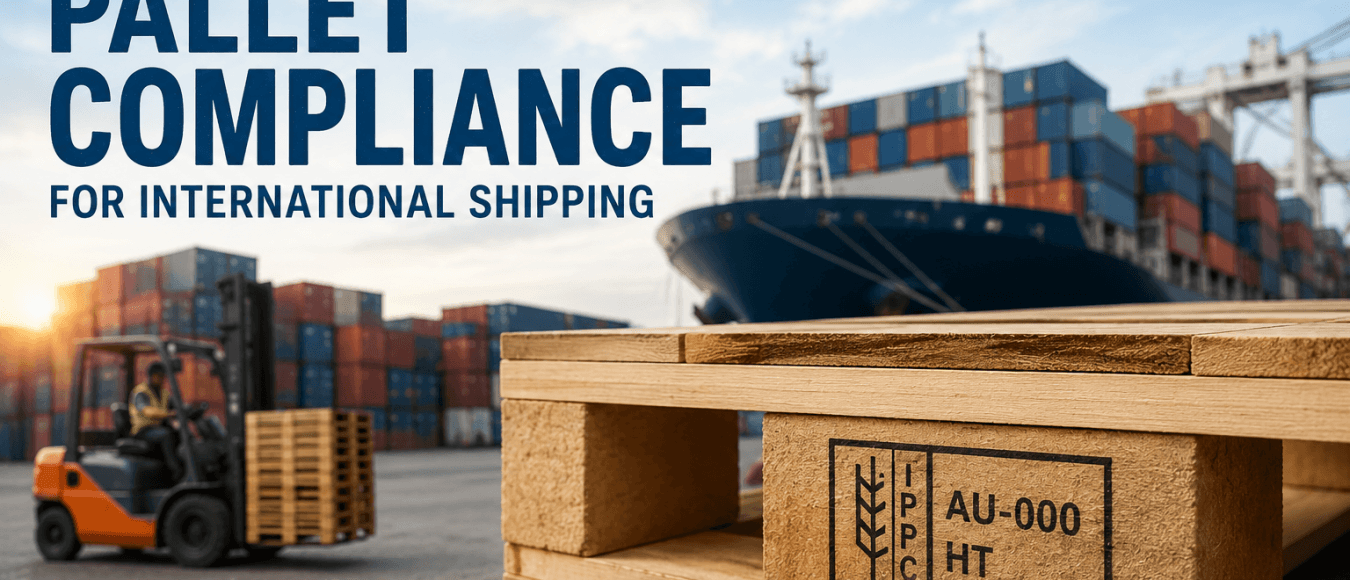
ISPM 15 is the international export standard for timber packaging.
In simple terms, timber pallets and timber crates used for export need to be heat treated to remove pests and insects that could spread into other countries. Once treated, the timber receives the recognised compliance stamp.
No stamp creates problems very quickly once the shipment reaches customs.
Depending on the destination country, that can mean:
- delayed freight
- quarantine inspection
- mandatory repacking
- shipment rejection
- destruction of the timber packaging
This catches businesses out regularly, especially companies buying generic pallets for sale online without confirming whether the timber is certified for export use.
Countries like the United States, China, India, and New Zealand (Change to North America, Asia and Europe aligns with pallet designs) can be particularly strict during inspections. If customs officers cannot clearly identify compliant timber packaging, they will usually stop the shipment first and ask questions later.
A proper export pallet supplier should already understand those requirements before production even begins.
For more information on ISPM 15 export requirements, see the Australian Government’s guide to ISPM 15 timber packaging rules.
Why custom pallets matter in export freight
Most export freight is not evenly balanced or neatly packed.
Machinery loads often place huge pressure on small points underneath the equipment. Wine and beverage freight creates high pallet weights across long container runs. Food exporters need pallets that handle moisture and repeated cold storage movement without breaking down.
That’s where custom timber pallets become valuable.
For heavy industrial freight, custom timber pallets may include:
- reinforced bearers
- thicker deck boards
- wider forklift entry points
- anti slip load surfaces
- crane lifting access
- export wrapping support
One mining supplier shipping pumps into Western Australia was regularly dealing with forklift damage because drivers could not safely access the pallet from all sides. The issue was not the forklift operators. The pallet design simply did not suit how the freight was being handled at depots. Adjusting the entry configuration solved the problem almost immediately.
Small pallet details make a bigger difference than most people expect.
An extra 50mm of pallet overhang can reduce usable container space. Poor bearer placement can cause forklifts to crack boards during unloading. Timber that performs well in dry warehouse conditions can swell badly after several weeks inside a humid shipping container.
Those issues rarely appear on the pallet invoice. They appear later through damaged freight claims, rejected deliveries, and frustrated customers. A simple fix for an expert might not be understood as a simple fix if you’re not dealing with this everyday.
Common export pallet mistakes
The same export packaging problems tend to repeat themselves.
Using domestic pallets for export jobs
A standard warehouse pallet is not automatically suitable for sea freight. As we all know a standard pallet is actually not standard at all.
Export loads go through far more handling points and spend much longer under load pressure compared to local deliveries.
Buying purely on price
A cheap pallet looks affordable until it collapses underneath expensive freight.
One broken pallet underneath a $60,000 machinery load wipes out any savings very quickly.
Ignoring container moisture
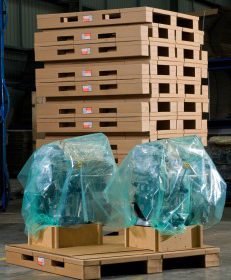
Containers sweat. Anyone who has worked around sea freight long enough has seen water dripping from container roofs after temperature changes during shipping.
That moisture gets trapped under shrink wrap and against steel surfaces. Without proper pallet spacing and moisture protection, rust becomes a serious issue.
Poor forklift access
Some pallets look fine sitting still. Then a forklift driver tries to unload them quickly at a freight depot and cracks half the deck boards because the access points are too tight.
That usually turns into double handling, unstable freight, and damaged product.
Oversized pallet footprints
Container space is expensive.
Even small increases in pallet dimensions can reduce how efficiently freight fits inside the container. Across dozens of export shipments every year, wasted space becomes a real transport cost.
Why experienced pallet suppliers ask so many questions
A proper export pallet supplier usually asks far more questions than expected.
What’s the product weight?
Are you stacking your pallets? Your load rating changes when more pallets are placed on top. (I have a great case study that will relate well still working on it)
Is the load evenly distributed?
How many handling points are there?
Will the freight sit outside?
Is it going by sea freight or air freight?
Will a pallet collar be more suited to your requirements?
Does the product need corrosion protection packaging?
How many times will the pallet be moved before delivery?
Would you like to reuse or sell the pallet at the delivery location? (I have a great case study that will relate well still working on it)
Those details directly affect how the pallet should be built.
A business exporting food products has very different freight risks compared to a company shipping mining equipment or defence components overseas. The pallet design, timber selection, wrapping system, and load restraint all change depending on the job.
That’s why experienced suppliers don’t just pull pallets for sale from a stock list and hope for the best.
Export packaging goes beyond the pallet itself
For many export jobs, the pallet is only one part of the packaging system.
Industrial exporters often also need:
- timber crates
- corrosion protection packaging
- vapour barrier wrapping
- heavy duty skids
- machinery restraint systems
- export cartons
- container bracing
Once businesses start shipping high value equipment overseas, the packaging usually matters far more than the pallet invoice itself.
A damaged machine, failed quarantine inspection, or delayed delivery can create weeks of operational problems downstream. That’s usually the point where businesses realise they need more than just a pallet supplier.
What good export packaging actually looks like
Most successful export jobs are fairly uneventful.
The freight arrives intact. Customs clears the shipment without delays. The container unloads safely. Nothing has shifted during transport. Nobody is arguing over damage photos or insurance claims weeks later.
That’s usually a sign the packaging was designed properly from the start.
Good export packaging does not attract attention. Bad export packaging does.
Talk to CMTP about export compliant custom pallets
CMTP manufactures custom pallets and export packaging solutions for Australian manufacturers, exporters, logistics companies, food producers, wineries, machinery suppliers, and industrial businesses.
With ISPM 15 certified export capability, national manufacturing coverage, and more than 46 years of industry experience, CMTP helps businesses reduce freight damage, improve export compliance, and build packaging systems suited to real world transport conditions.
If your export freight is becoming more complex, or your current pallets are creating handling and compliance issues, speak with the CMTP team before the next shipment leaves site.
FAQs
Do export pallets always need ISPM 15 certification?
For most international shipments using timber packaging, yes. The timber must be heat treated and stamped correctly to meet import requirements.
Can I use second hand pallets for export freight?
Only if they still meet export compliance standards and remain structurally sound for the shipment. Many exporters avoid second hand pallets because of compliance and strength concerns.
Why are custom pallets better for machinery transport?
Machinery loads often place heavy pressure on concentrated areas underneath the equipment. Custom pallets distribute the load more safely and reduce movement during transport.
What happens if export pallets fail inspection?
The shipment can be delayed, rejected, quarantined, or repacked depending on the issue and destination country.
Does pallet design affect freight costs?
Yes. Pallet size, weight, and layout all affect how efficiently freight fits into containers and trucks. Better pallet design can reduce wasted space and improve freight efficiency over time.