For procurement managers, pallets are rarely just a line item. They influence freight costs, export compliance, handling efficiency, and the protection of high-value goods throughout the supply chain. Choosing the wrong pallet supplier can lead to damaged product, delayed shipments, compliance failures, and unnecessary rework. Choosing the right one creates consistency, reliability, and long-term cost control.
Before committing to a pallet supplier, procurement managers should ask the right questions to ensure the supplier understands their operation and can support it at scale.
Does the pallet supplier understand my application and load requirements?
A reliable pallet supplier should never quote without understanding how your pallets will be used. Procurement managers should confirm the supplier has assessed load weight, handling methods, storage conditions, and transport routes. Pallets used in racked warehouses, export containers, or heavy industrial environments all require different designs and materials.
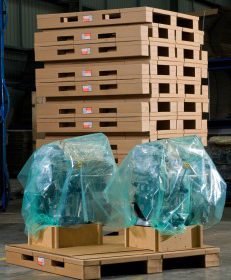
Suppliers like CMTP manufacture a wide range of solutions, from standard and heavy-duty wooden pallets to cardboard and export-compliant pallets, allowing procurement teams to match pallet design to real-world conditions rather than accepting a one-size-fits-all option.
Learn more about CMTP pallet solutions.
What certifications and compliance standards does the supplier meet?
Compliance is a non-negotiable requirement for many industries. Procurement managers should confirm which certifications a pallet supplier holds and how compliance is maintained across production.
If pallets are used for export, they must meet ISPM 15 standards to prevent quarantine delays and border rejections. For food, beverage, and pharmaceutical supply chains, hygiene and traceability standards are equally critical.
CMTP operates with ISO 9001 quality systems and ISPM 15 certification, providing procurement teams with confidence that pallets meet domestic and international compliance requirements.
For background on export pallet standards, ISPM 15 is outlined here: https://en.wikipedia.org/wiki/ISPM_15
Can the supplier support consistent lead times at scale?
Lead time reliability is often more important than price. Procurement managers should ask how pallets are manufactured, where facilities are located, and how quickly additional volume can be supplied during peak demand.
Suppliers with a single production site may struggle to scale or respond to urgent requirements. CMTP’s national manufacturing footprint allows pallets to be produced closer to customer sites, supporting faster turnaround times and supply continuity across multiple locations.
View CMTP’s national locations.
How does pricing account for total cost of ownership?
The cheapest pallet is rarely the most cost-effective. Procurement managers should discuss pallet lifespan, damage rates, handling efficiency, and replacement frequency when reviewing pricing.
A well-designed pallet that lasts longer, reduces product damage, and improves handling efficiency often delivers lower total cost over time. A quality pallet supplier should be able to explain how their design and materials reduce downstream costs rather than focusing only on unit price.
Can the supplier design custom pallets when standard sizes are not suitable?
Many industries move products that do not suit standard pallet sizes. Machinery, oversized loads, and export equipment often require custom-engineered pallets or packaging systems.
Procurement managers should confirm whether a supplier offers in-house design and engineering support. CMTP provides custom pallet and packaging design, allowing procurement teams to solve non-standard challenges without relying on multiple suppliers.
Explore CMTP’s design and engineering capability.
How does the supplier manage quality control and defects?
Even small pallet defects can cause operational issues. Procurement managers should ask how pallets are inspected, what quality controls are in place, and how defects are handled if they occur.
A reliable supplier should clearly outline inspection processes, corrective actions, and communication protocols to minimise disruption and protect long-term supply relationships.
What sustainability options are available?
Sustainability is increasingly important in procurement decisions. Pallet suppliers should be able to explain how timber is sourced, whether pallets can be reused or recycled, and how waste is managed.
Sustainable pallet solutions can support corporate environmental goals while also improving efficiency and reducing disposal costs.
Can the supplier act as a long-term partner, not just a vendor?
The strongest supplier relationships are built on collaboration. Procurement managers should look for pallet suppliers who offer proactive support, consistent communication, and the ability to adapt as operational needs change.
Suppliers that understand your business, not just your purchase orders, are more likely to deliver long-term value.
Frequently Asked Questions
What questions should procurement managers ask a pallet supplier first?
Procurement managers should start by asking about pallet suitability, compliance certifications, lead times, and the supplier’s ability to scale with demand.
Why is ISPM 15 important when sourcing pallets?
ISPM 15 ensures wooden pallets meet international phytosanitary requirements, preventing quarantine delays and rejected export shipments.
How do I know if a pallet supplier can handle national distribution?
Check whether the supplier has multiple manufacturing sites, national logistics coverage, and experience supplying multi-site customers.
Are custom pallets more expensive than standard pallets?
Not always. Custom pallets often reduce damage, handling issues, and replacement costs, which can lower total cost over time.
What certifications should an industrial pallet supplier hold?
Common certifications include ISPM 15 for export, ISO 9001 for quality systems, and industry-specific standards for regulated sectors.
How do pallet choices affect supply chain efficiency?
The right pallet design improves handling speed, reduces damage, and supports better space utilisation in storage and transport.
Should procurement teams prioritise price or reliability?
Reliability usually delivers better long-term value by reducing delays, defects, and operational disruptions.
Can pallet suppliers assist with packaging beyond pallets?
Many advanced suppliers offer crates, cases, and complete packaging solutions to support complex logistics requirements.
How often should pallet suppliers be reviewed?
Regular reviews help ensure pricing, quality, and service levels continue to align with operational needs.
Ready to speak with a pallet supplier who understands procurement?
If you are reviewing pallet suppliers or planning to optimise your supply chain, CMTP can help. With national manufacturing, certified compliance, and custom pallet capabilities, CMTP supports procurement managers across Australia.
Request a quote or speak with the CMTP team today.