Quick Answer
Working with a national pallet supplier in Australia businesses can rely on to help prevent stockouts by giving you more than one way to keep pallets moving. Multiple manufacturing sites, consistent specs, and backup production capacity reduce the chance of delayed dispatch, missed freight bookings, or finished stock sitting on the floor.
Key Takeaways
Pallet stockouts stop more than pallet orders
They can hold up production, warehouse dispatch, container loading, and customer deliveries.
Average weekly usage is not enough
A business using 500 pallets a week may need 1,500 during harvest, Christmas, a new contract, or a major production run.
One supplier site can become the weak spot
If that site has a timber shortage, machinery issue, or capacity problem, your business may have nowhere else to go.
National supply gives you backup
A supplier with multiple manufacturing locations has more options when demand changes quickly.
Consistent pallet specs matter across sites
If your Melbourne, Sydney, Brisbane, and Adelaide teams all use different pallet specs, ordering and handling becomes harder than it needs to be.
Why Pallet Stockouts Hit So Hard
Pallet shortages usually show up at the worst possible time.
The goods are packed. The truck is booked. The warehouse team is ready. Then someone realises there are not enough pallets to get the load out.
That delay can affect more than one dispatch.
A food manufacturer might have seasonal stock ready for a supermarket delivery window. A machinery supplier might have a customer waiting on a heavy item that needs a custom pallet. An exporter might have a container booking that cannot move because the correct ISPM 15 pallets are not available.
The pallet itself is rarely the expensive part.
The expensive part is the downtime, the freight changes, the overtime, the missed delivery slot, and the calls you have to make to customers explaining why their order is late.
That is why many larger businesses look for a pallet supplier Australia wide, not just the closest business that can deliver a few pallets this week.
Why Do Pallet Stockouts Happen?
Most pallet stockouts come from normal business pressure.
Not bad planning.
A production run gets bigger. A harvest comes in heavier than expected. A new customer places a larger order than forecast. A warehouse starts servicing a second region. A site that usually orders 300 pallets a week suddenly needs 900.
This is particularly common for businesses experiencing rapid growth or seasonal demand spikes, where fast turnaround pallet manufacturing becomes critical to keeping operations moving.
Then the supplier gets stretched.
A nail line goes down. Timber supply tightens. A transport delay pushes deliveries back. Another large customer takes up production capacity. Small issues stack up quickly.
Businesses that import or export products should also monitor broader supply chain risks identified by the Australian Border Force, particularly when freight schedules, inspections, or international shipping requirements affect delivery timelines.
If your entire pallet supply depends on one local site, there may be no quick backup. You either wait, ring around, accept a different spec, or pay extra freight to get stock from somewhere else.
None of those options are ideal when your team needs pallets on the floor now.
How a National Pallet Supplier Australia Helps Prevent Shortages
A national pallet supplier in Australia wide gives your business more ways to keep supply moving.
The main benefit is backup.
If one site is at capacity, another site may be able to support the order. If your Sydney warehouse needs stock but your usual supply point is stretched, a broader manufacturing network gives the supplier more options. If your Adelaide operation suddenly increases volume, you are not starting from zero with a new supplier.
This matters for businesses with more than one site.
A manufacturer with facilities in Melbourne and Sydney does not want two different pallet specs unless there is a reason for it. A food producer supplying multiple distribution centres does not want every state ordering slightly different pallets. A logistics team does not want forklifts, racking, and load plans adjusted because pallet quality changes by region.
A national supplier can help keep the pallet spec consistent while still supplying from locations close to where the pallets are needed.
That reduces handling issues.
It also makes purchasing easier.
Local Supplier vs National Pallet Supplier
| Supply issue | Local supplier only | National pallet supplier |
| One site reaches capacity | Orders may be delayed | Other sites may help support supply |
| Business expands interstate | New suppliers need to be found | Existing supply plan can often be extended |
| Pallet specs vary by location | Higher chance of inconsistency | Specs can be standardised across sites |
| Seasonal demand increases | Limited backup options | More production flexibility |
| Export pallets needed quickly | May depend on local availability | More chance of supply through certified sites |
| Procurement workload | Multiple supplier relationships | One main supplier relationship |
This does not mean every business needs a national supplier.
A single local warehouse with steady usage may be fine with a local arrangement.
But once your operation has multiple sites, export requirements, peak season pressure, or high weekly pallet demand, the risk changes.
Average Pallet Usage Can Mislead You
One mistake businesses make is ordering pallets based on average weekly usage.
The average looks safe on paper.
Then peak demand arrives.
A fresh produce business might run comfortably most of the year, then need far more pallets during harvest. A beverage company might increase output before summer. A manufacturer might win a new contract and need three months of pallets in a much shorter window.
If your pallet plan only covers the quiet weeks, you will be short during the weeks that matter most.
A better approach is to look at your highest demand periods, not just your normal usage. Ask how many pallets you need when everything is running at full speed. Then ask whether your current supplier can handle that number without putting your dispatch schedule at risk.
The same principle applies when planning warehouse capacity and pallet inventory levels. Businesses that regularly review their pallet requirements often avoid the storage and handling issues discussed in How to Optimise Warehouse Space Using the Right Pallets.
That is the conversation worth having before the busy period starts.
Why Consistent Specs Matter Across Multiple Sites
Pallet stockouts are not always about having no pallets.
Sometimes the problem is having the wrong pallets.
A light pallet may suit a product on its own, but not if finished goods are stacked two or three high in storage. A pallet that works for short local transport may not be right for export. A standard pallet may be fine for one product line but wrong for machinery, oversized freight, or awkward loads.
Across multiple sites, these small differences become harder to manage.
One warehouse orders a heavier pallet. Another keeps using a lighter one. One site needs ISPM 15 treatment for export. Another is using pallets suited to domestic freight only. Someone changes a spec to save money, but the warehouse team starts seeing more broken boards or unstable loads.
A good pallet supplier will not just ask how many pallets you want.
They will ask what is going on the pallet, how it is being handled, where it is going, how it is stacked, and whether export or food safety requirements apply.
That is how you avoid buying pallets that are technically available but not suitable for the job.
What Should Procurement Teams Ask Before Choosing a Pallet Company?
Procurement usually gets judged on price, availability, and supplier performance.
That makes sense.
But with pallets, the cheapest option can become expensive fast if it leads to delays, damage, or inconsistent supply.
Many of the same questions are covered in What Procurement Managers Should Ask a Pallet Supplier, particularly around capacity, lead times, and long term supplier performance.
Before choosing a pallet company, ask practical questions.
Can they supply every location you operate in?
Can they handle your busiest month, not just your average month?
Do they manufacture standard and custom pallets?
Can they supply ISPM 15 export pallets when needed?
Can they keep pallet specs consistent across different states?
What happens if one manufacturing site is full?
How much notice do they need before a seasonal spike?
The answers will tell you whether the supplier is set up for your operation or just the next purchase order.
Where Pallet Manufacturers Add Real Value
Good pallet manufacturers do more than produce the same item over and over.
They help you avoid problems before they reach the warehouse floor.
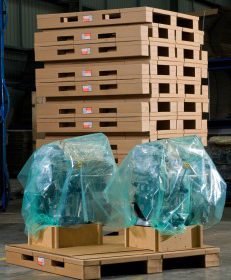
For example, a manufacturer moving heavy equipment may need a custom pallet with the right bearer layout for forklift access. A food business may need HACCP suitable pallets and consistent supply across busy seasonal periods. An exporter may need compliant pallets ready before a container is cut off. A distribution centre may need colour coding or clear visual differences between light, medium, and heavy duty pallets so the yard team picks the right one quickly.
Businesses exporting regularly should also review the Export Pallets Checklist for Australian Manufacturers to avoid common compliance issues.
Those details matter.
They reduce errors.
They also help your team move faster because the pallet fits the way the operation actually works.
How CMTP Helps Businesses Reduce Pallet Supply Risk
CMTP works with businesses where pallet supply affects production, dispatch, export, and customer delivery.
That includes manufacturers, food and beverage producers, fresh produce suppliers, machinery businesses, logistics operators, defence contractors, and exporters.
With more than 46 years of experience and manufacturing locations across multiple Australian states, CMTP is set up to support businesses that need more than a one off pallet order. The team can help with standard pallets, custom pallets, export pallets, heavy duty applications, and packaging requirements across multiple sites.
The value is not just making pallets.
It is helping your business avoid the common problems that come with poor fit, poor timing, and poor supply planning.
Preventing Stockouts Starts Before the Rush
The best time to fix a pallet supply problem is before the warehouse runs short.
Look at your peak periods. Look at your interstate sites. Look at your export requirements. Look at whether the same pallet spec still suits your current operation.
If your business has grown, changed product lines, added new sites, or increased dispatch volume, your old pallet supply setup may not be enough anymore.
A reliable pallet supplier in Australia wide can help you plan for those changes before they turn into missed deliveries or stock sitting in the wrong place.
FAQs
What causes pallet stockouts?
Pallet stockouts are usually caused by demand spikes, timber supply pressure, supplier capacity issues, machinery downtime, transport delays, or poor planning around peak periods.
Why choose a national pallet supplier instead of a local supplier?
A national supplier gives your business more backup options. Multiple manufacturing locations can help reduce the risk of delays if one site is full, short on materials, or affected by transport issues.
Can a national pallet supplier support multiple warehouse locations?
Yes. A national supplier can help keep pallet specs consistent across different sites while supplying pallets closer to where each operation needs them.
Do national pallet suppliers provide custom pallets?
Many do. Custom pallets can be designed for load weight, product size, forklift access, stacking requirements, export compliance, and warehouse handling.
How can I reduce the risk of pallet shortages?
Review your peak usage, not just average weekly usage. Speak with your supplier before busy periods, standardise specs where possible, and work with a supplier that has enough production capacity to support your growth.
Need a Reliable National Pallet Supply Partner?
CMTP helps Australian businesses keep pallet supply reliable across manufacturing, logistics, food, produce, export, defence, and industrial operations.
Whether you need standard pallets, custom pallets, ISPM 15 export pallets, or ongoing pallet supply across multiple locations, CMTP can help build a supply plan that fits your operation.
Speak with the CMTP team to discuss pallet supply for your site, your product, and your delivery schedule.